Great Hallway, Wrong Hands: The Birth Mistake Nobody Warns You About
Let me tell you about a birth I think about a lot.
A family did everything right. They toured hospitals. They read the reviews. They asked their friends. They chose a hospital with a genuinely beautiful unit culture — nurses who help you change positions, wireless monitors, a team that treats a slow labor like a normal labor instead of a problem to solve.
And their birth still didn't go the way they'd planned. Not because of the hospital. Because of the provider.
Great hallway. Wrong hands.
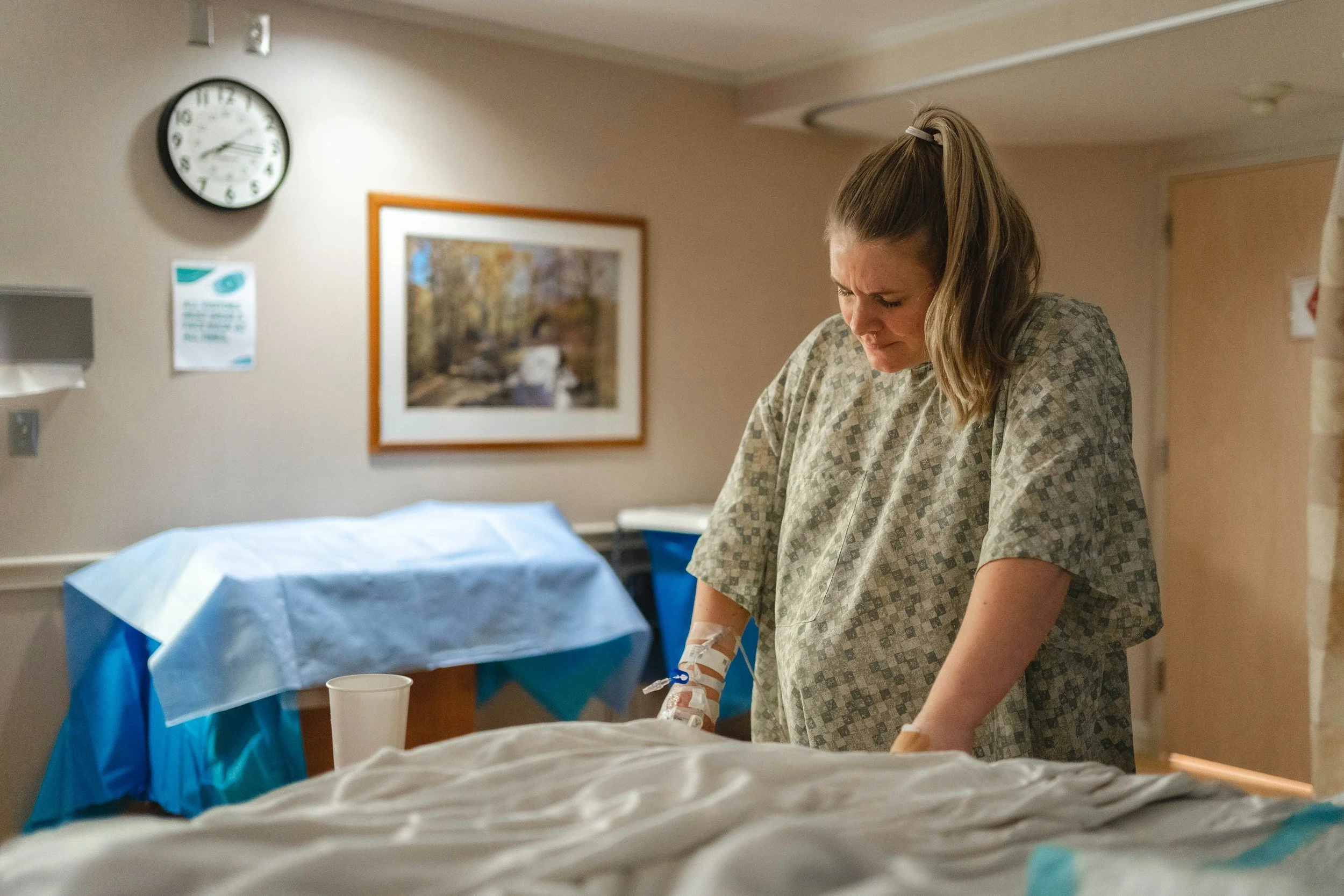
The mistake isn't picking a bad hospital
My recent hospital guide sparked a lot of conversation, and I've been reading every bit of it. One theme kept surfacing: people describing their provider experience as their hospital experience. Which makes sense — from the inside of your own birth, it all feels like one thing.
But here's what 130+ births have taught me: your provider and your hospital are two separate choices. And the most heartbreaking mismatches I've witnessed aren't families who picked a rough hospital. They're families who picked a wonderful hospital — and assumed the provider came with it.
The hospital doesn't hire your OB's judgment. The beautiful unit culture doesn't set your provider's C-section threshold. Those things walk in the door with the person catching your baby.
What "wrong hands" actually looks like
I don't mean bad doctors. In ten years I've worked alongside providers all over the Houston area, and most of them are skilled, caring people. "Wrong hands" almost never means incompetent hands. It means mismatched ones.
It looks like:
A C-section threshold lower than you realized. Some providers genuinely see surgical birth as a last resort. Others reach for it earlier — at hour eighteen instead of hour thirty, at the first ambiguous heart tracing instead of the third. Neither is automatically wrong. But if you're planning an unmedicated birth or a VBAC and your provider is in the second camp, no amount of supportive nursing staff changes whose call it is.
Patience in the office, urgency in the room. Prenatal visits are calm. Fifteen minutes, no clock pressure, "we'll follow your body's lead." Then labor day comes and you meet a different version of the same person — one with three other patients on the floor and a schedule. The office visit is the audition. The birth room is the show. They're not always the same performance.
A group practice roulette. Your provider might be a perfect match — and share call with five partners you've never met. In a hospital with a strong unit culture, a handoff to a stranger is a hiccup; the nurses and the norms carry you. But the biggest decisions — when to augment, when to call it, how to interpret a tracing — still belong to whoever's on call. You can love your OB and still give birth with someone whose philosophy you'd never have chosen.
"Supportive" that expires. Some providers are supportive of your birth plan right up until it costs them something — time, mostly. The tell isn't what they say about your plan. It's what they say about time. Ask how long they're comfortable letting a healthy labor take, and listen for a number.
The hospital can't save you from this — and that's not its fault
Here's the part that surprises families: a genuinely great unit culture will support you beautifully within your provider's decisions. The nurses will help you labor in every position, guard your quiet, cheer you on — and then your provider will make the call, because that's how the system works. The nurses don't overrule the OB. The hallway doesn't overrule the hands.
That's not a flaw in the hospital. It's the reason you have to make two choices, not one.
The reverse is true too, by the way — a wonderful, patient provider can be worn down by a unit culture that pushes intervention. But in my experience, that mismatch is more visible. Families sense a tense unit. What they don't sense, until it's happening, is a provider mismatch inside a hospital they love. The hallway is so nice that nobody thinks to question the hands.
How to check the hands, not just the hallway
Questions that get past the audition:
Ask for numbers, not vibes. "What's your C-section rate?" is fine. Better: "If baby and I are both doing well, how long are you comfortable letting my labor take?" A provider who answers with a philosophy is different from one who answers with a deadline.
Ask about the group. "Who catches my baby if you're not on call — and do they practice the way you do?" If the answer is a shrug, that's your answer.
Ask the specific question that matters to you.VBAC? Ask how many they attended last year — not whether they're "VBAC-friendly." Unmedicated? Ask what percentage of their patients birth without an epidural. Vague support is not support.
Watch for the pivot. If every answer routes back to "we'll see how things go," you're not getting a plan. You're getting flexibility — theirs, not yours.
Ask someone who's watched them work. A doula who's been in the room with a provider a dozen times knows things a review site never will. We see the pattern, not the marketing. (Yes, that's a little self-serving. It's also just true.)
The bottom line
You can choose the best hallway in Houston and still end up in the wrong hands. So make both choices on purpose: the hospital for its culture, the provider for their judgment — and check that they actually match the birth you're hoping for.
If you're expecting here in Katy, Fulshear, Cypress, or greater Houston and you want help pressure-testing both choices with someone who's stood in those rooms 130+ times — that's exactly what I'm here for.
You can be scared. I'm not. That's the whole point.
Alysa Kowis is the owner of Brave Birth Co., a birth and postpartum doula practice serving Katy and greater Houston, with 10 years of experience and 130+ births attended.